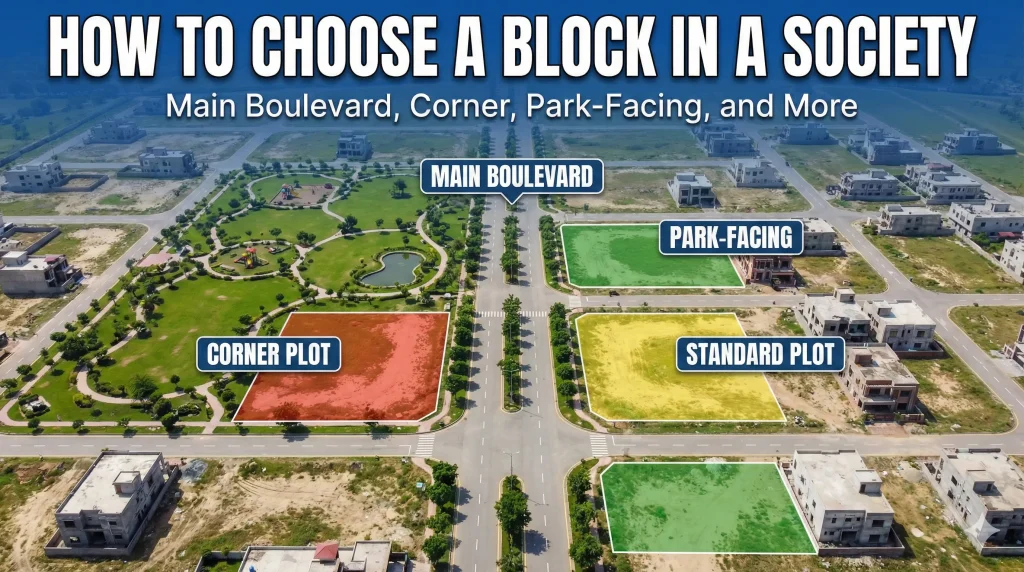
Choosing the right society is only half the decision. The real difference in resale value, living comfort, and future demand often comes down to one thing: which block and which plot location you choose inside that society.
Two plots of the same size in the same society can have a large price difference because plot position changes daily life, privacy, noise, parking, sunlight, and buyer demand. This guide breaks down the most common plot types and how to choose based on your goal.
Step 1: Decide your goal first (living or investment)
Before you compare plot features, be honest about your purpose.
If you are buying to live, prioritize comfort, privacy, safety, and ease of access.
If you are buying for resale, prioritize what most buyers will pay extra for and what sells faster.
If you want rental income later, prioritize access, nearby commercial areas, and practical commuting.
Your goal changes the “best” choice.
Main Boulevard plots: visibility and convenience, but not always peaceful
Main boulevard plots are located on major internal roads where traffic flow is higher.
Pros
High visibility, especially useful for commercial or future mixed-use routes
Easier access from entrances and main connecting roads
Often better maintained because they are prominent roads
Cons
More noise and traffic
Less privacy for residential living
Higher risk of parking and congestion as the society becomes populated
Best suited for
Commercial buyers or investors who expect future business activity
Residential buyers only if they are comfortable with traffic and want quick access
Corner plots: more open space, more flexibility, usually higher price
Corner plots have roads on two sides, which gives them extra openness and easier design options.
Pros
Better ventilation and natural light
More flexibility in house design, windows, parking, and entry
Usually considered premium and easier to sell
Cons
More exposure, less privacy than a mid-street plot
Higher boundary wall cost because more sides face roads
Sometimes higher security concern because of multiple road sides
Best suited for
End-users who want airy homes and flexible layouts
Investors looking for premium resale demand
Park-facing plots: lifestyle premium, strong resale, but check the details
Park-facing plots face a green area or park, which creates open views and a quieter feel.
Pros
Better view, more breathing space
Family-friendly vibe, children play nearby
Often attracts end-users and supports strong resale
Cons
More foot traffic near your front side
Noise can increase in evenings if the park is active
Sometimes parking issues if the park becomes a gathering point
Best suited for
Families, end-users, and resale-focused buyers
People who value scenery and open space
Tip: Not every green area stays a full park forever. Prefer plots facing clearly marked, properly sized parks on the master plan, not tiny green pockets.
Facing a commercial area: convenient but can become noisy
Plots near commercial zones can perform well, but they come with trade-offs.
Pros
Convenience: groceries, pharmacy, services nearby
Potential rental demand if the area becomes active
Often sees faster activity once shops open
Cons
Noise, traffic, and weekend congestion
Parking spillover near residential streets
Privacy issues, especially if commercial grows aggressively
Best suited for
Investors who want liquidity and practical demand
End-users only if they accept a more active environment
Near the entrance: early convenience, long-term traffic
Plots close to the main entrance are often attractive, especially in early stages when the society is still developing.
Pros
Easier access, shorter internal travel time
Useful if you commute daily
Can mature faster because it is close to main movement
Cons
Traffic increases as society populates
More noise and more outsiders passing by
Headlights and street activity can be annoying at night
Best suited for
Commuters and practical end-users
Investors who want early-stage liquidity
Dead-end and cul-de-sac plots: quiet and private, but resale depends
Cul-de-sac plots are located at the end of a street with low traffic.
Pros
Quiet, safe for kids, less traffic
More privacy and peaceful living
Often preferred by families who want calm streets
Cons
Sometimes harder to sell quickly because fewer buyers search for it
Construction activity can block the street temporarily
If street width is narrow, parking can be difficult
Best suited for
End-users who want peace above all
Long-term holders rather than quick flippers
Near schools, mosques, or community centers: balance convenience and noise
These locations can be excellent if you choose smartly.
Pros
Daily convenience and strong family demand
Good for resale because many families prefer it
Safe movement and active community
Cons
Crowds at peak times, especially during prayer times or school hours
Parking and traffic can increase
Noise levels can vary depending on management
Best suited for
Families and end-users
Resale buyers targeting family demand
Plot orientation and sunlight: an overlooked factor that affects comfort
Many buyers focus on location but ignore direction and sunlight exposure. In hot climates, sunlight and airflow can affect comfort and electricity costs.
General practical tip:
Choose a plot that gets balanced light and ventilation and does not become a heat trap due to poor airflow.
What matters more than superstition is real comfort: breeze, shade, and practical layout.
Plot size and shape: regular plots are easier to build and resell
Even in premium locations, odd-shaped plots can create construction headaches.
Prefer:
Regular rectangular plots for easier design, lower cost, and stronger resale demand.
If you choose an irregular plot, do it only if the price discount is meaningful and you already have a design solution.
A simple scoring method to choose the best plot for you
Use this quick scoring method. Give each point a score from 1 to 5.
- Convenience for commute
- Noise and privacy level
- Safety and street traffic
- Resale demand for that location type
- Future risk, such as commercial creep or congestion
Total the score. The top score usually reveals the right choice based on your lifestyle and goal.
What most buyers regret later
Here are common regrets you can avoid:
Buying on the main boulevard for residential living, then hating the noise
Paying extra for “park-facing” that is actually a small green strip
Buying near commercial without realizing traffic will grow
Choosing a dead-end street and struggling to sell quickly
Ignoring plot shape and facing expensive construction compromises
Final thoughts
The best block and plot location is the one that matches your goal. For many buyers, park-facing and corner plots offer strong lifestyle and resale advantages, while main boulevard and commercial-adjacent plots suit investors who want activity and visibility.
If you decide with a clear purpose and verify the master plan and on-ground reality, you will avoid most mistakes and buy a plot that stays desirable for years.
If you want, tell me your plot size and your goal, living or investment, and I can suggest the top 3 plot types with a short reason for each.