In Pakistan’s property market, location is not only about distance from a city center. It is about how fast, how reliably, and how cheaply people can reach that location every day. That is why road infrastructure like motorway interchanges, ring roads, and major arteries such as GT Road can push property values up faster than many other factors.
This blog explains the real reasons access drives prices, how different road types affect demand, what investors usually miss, and a practical checklist you can use before buying.
The simple rule: Access creates demand, demand raises price
A housing society or commercial area becomes valuable when more people can reach it with less time and less uncertainty. Better access does three things at once:
- It increases the number of buyers who consider the location “livable.”
- It increases commercial activity because customers and suppliers can reach it.
- It reduces holding risk since resale becomes easier when the location is connected.
This is why two projects that are the same on paper can behave very differently in the market. The one with better access usually has stronger resale and faster maturity.
1) Interchanges: The value multiplier you can feel in daily life
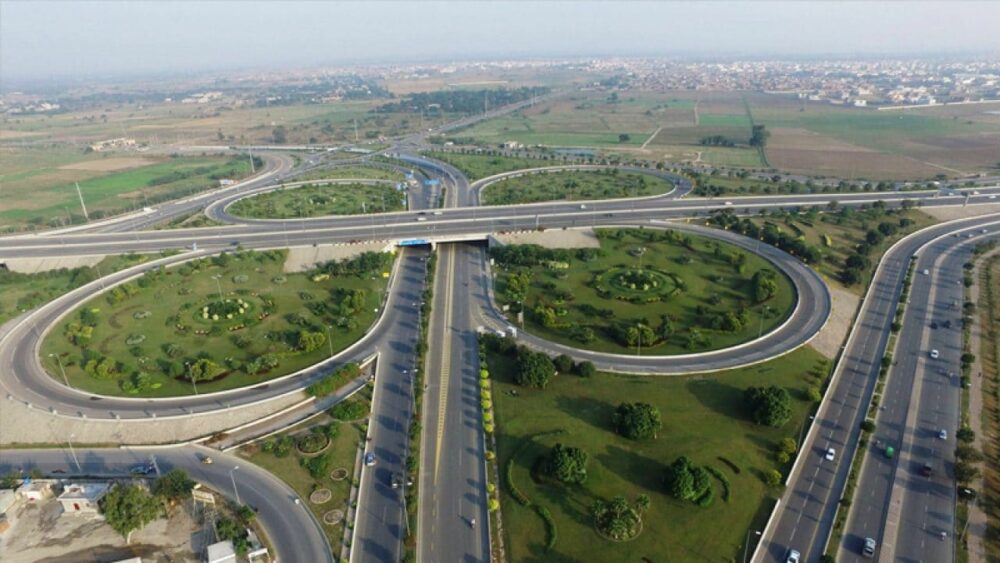
A motorway interchange is not just a road feature. It is a shortcut to economic activity.
Why interchanges lift property value
- Faster commute for office workers and students.
- Easier weekend travel and family visits, which matters a lot for end users.
- Better logistics for business, retail, warehouses, and services.
- Less “mental distance.” People feel it is closer when the drive is smoother.
What you see in the market near interchanges
- More hotel, fuel station, and retail development.
- Higher demand from investors and end users.
- Faster commercial plot activation because traffic brings customers.
A key detail many buyers ignore
“Near an interchange” can be marketing language. The difference between 3 minutes and 15 minutes matters. Also, the route quality matters. A short distance on a broken access road does not behave like true interchange connectivity.
2) Ring roads: They change entire growth directions
Ring roads are designed to move traffic around a city without forcing it through congested centers. That makes them powerful for property values.
Why ring roads impact prices
- They reduce travel time variance. A stable 25 minute commute is often more valuable than a risky 15 to 45 minute commute.
- They connect multiple zones, not just one city point. That widens the buyer pool.
- They attract planned developments because planners prefer predictable access.
What ring roads usually do to nearby property markets
- They create new commercial pockets at junctions and interchanges.
- They raise land utility around exits and service roads.
- They speed up a society’s “liveability timeline” because people are willing to shift earlier.
The reality check
Ring road impact depends on two things:
- How many functional connections exist, not just a line on a map.
- Whether access points and service roads are actually usable and open.
3) GT Road: Old road, huge economic value
GT Road is one of the most commercially active corridors in Pakistan because it links major cities, towns, markets, and supply chains. Even when motorways carry faster traffic, GT Road still drives local commerce.
Why GT Road access keeps demand strong
- Dense markets and services already exist along the corridor.
- Transport is easier for workers, vendors, and daily wage services.
- Commuting is flexible because it connects multiple feeder roads.
What this means for property
- Residential demand grows through practicality, not luxury marketing.
- Commercial plots can perform better earlier because footfall and transport exist.
- Rental demand often strengthens since people working in nearby markets need housing.
Trade off you must consider
GT Road access can also mean noise, heavy movement, and mixed activity. For some families, that lowers lifestyle appeal. For investors, that may be fine if rental and resale liquidity is the goal.
What actually increases value: time saved, not kilometers
Buyers often ask, “How many kilometers from Islamabad or Rawalpindi?” That question is incomplete.
A better question is:
“How many minutes in real traffic during normal hours?”
Time is what people pay for. A location that is 30 km away can outperform a location 18 km away if the first has smooth access and the second has bottlenecks.
Primary drivers: how access turns into money
Here are the main ways road connectivity turns into higher prices and better resale.
1) End user confidence rises
Families prefer locations with predictable access to schools, hospitals, work, and relatives. When confidence rises, more real buyers enter the market. Real buyers stabilize prices.
2) Commercial activity arrives sooner
Retail, clinics, schools, and services follow traffic. Once commercial plots start operating, a society stops feeling “future only” and starts feeling real.
3) Development pace often improves
Developers and contractors can move materials and labor more efficiently. That can reduce delays and speed up delivery, especially in large projects.
4) Resale liquidity improves
More buyers want connected locations. That means faster resale and fewer forced discounts when you need to exit.
Hidden risks: access can also create mistakes
Better access does not automatically mean a safe purchase. Watch these common traps.
Trap 1: Buying purely on announced infrastructure
Prices can rise on news and marketing, then cool down if timelines slip. Never pay a premium only for “future access” unless you are comfortable holding long-term.
Trap 2: Confusing “main road touch” with “good access”
Some sites sit on a main road but have unsafe turns, no service road, or heavy U-turn delays. That reduces practical value. Visit at rush time to understand reality.
Trap 3: Ignoring internal access
External access is not enough. If internal roads, entrances, and sector connectivity are poor, the user experience suffers, and so does demand.
A practical checklist before you buy near a major road
Use this checklist to judge whether access will truly support value.
- Drive the route at two times: morning and evening peak
- Measure minutes, not kilometers
- Confirm whether entry points are open and usable
- Check service road quality and safety of turning points
- Look for real signs of activity: shops, fuel, schools, transport options
- Ask where the nearest main junction is, then test it yourself
- Check internal road widths and society entrance planning
- Compare prices with a similar society that has weaker access to see how much premium you are paying
- Decide your goal: living, rental, or resale. Access matters differently for each
Who should prioritize which road type?
If you are an end user
Prioritize predictable commute, safe access, and daily convenience. Ring road connectivity and clean interchange access usually matter more than being near a busy commercial corridor.
If you are an investor
Prioritize resale liquidity, commercial activation, and growth direction. Interchange zones and ring road junctions can create strong future demand, but verify timelines and access reality.
If you want rental income
Prioritize practical transport routes and nearby job centers. Locations with multiple access options, including GT Road corridors and feeder roads, often have steadier rental demand.
Bottom line
Interchanges, ring roads, and GT Road access change property value because they change human behavior. They reduce travel stress, expand buyer demand, accelerate commercial activity, and improve resale liquidity. But the premium is only worth paying when access is real, usable, and matched to your goal.